Java 6 Se Download Mac
Download Java for OS X 2017-001 Java for macOS 2017-001 installs the legacy Java 6 runtime for macOS 10.13 High Sierra, macOS 10.12 Sierra, macOS 10.11 El Capitan, macOS 10.10 Yosemite, macOS 10.9 Mavericks, macOS 10.8 Mountain Lion, and macOS 10.7 Lion. I have just made a clean installation of OS X Mavericks, and I have downloaded Eclipse Kepler, but if I execute it, gives me this message. Asking me to install Runtime Java SE 6; I have already installed Java 7, and if I press Install in that dialog, download and install it, and open Eclipse again, the dialog appears again. How I can fix it? Download from here: 1. Java Archive Downloads - Java SE 6 2. Java Runtime Environment. Java SE 6 for Mac Free Download Full Version in a single fast link. It is an offline installer of complete Java SE 6 for Mac OSX. Java is so pervasive it’s right around a fundamental piece of processing life. More than three billion gadgets use it, including obviously PCs. Quite a while prior, it was even introduced as a component of Windows, however, some le. If you’re not sure whether Java is installed on your Mac, simply search for Terminal in Spotlight and type: java -version at the command prompt. If Java is on your Mac, you’ll see a message saying something like “Java (TM) Runtime Environment” in this case version 1.6 (or Java 6 as it is commonly known).
An error “you need to install the legacy Java SE 6 runtime”, is encountered when you open any Adobe application.
With Mac OS 10.7 (Lion) and later, the Java runtime is no longer installed automatically as part of the OS installation. Follow any of the methods below to install Java runtime.
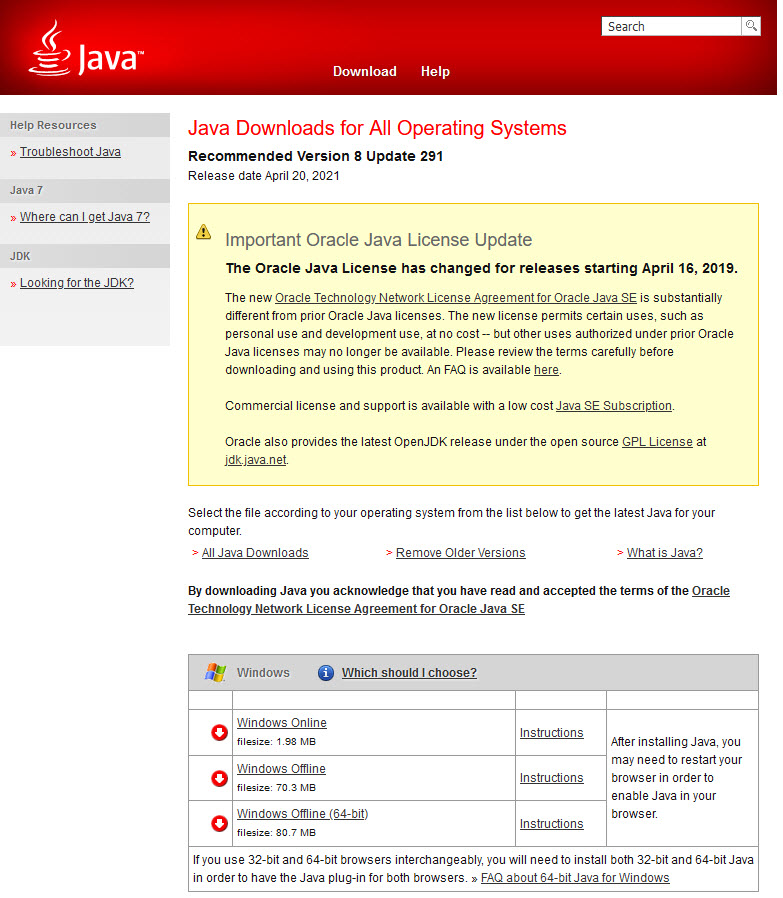
You can download and install the latest Java runtime from the Java website - Download Free Java Software.
Note:
On Mac OS 10.10 (Yosemite), when you launch any Adobe product, you might receive a warning 'The Application has been moved and its path has been changed..'.
Click Repair Now or Update button to update the location and resolve the issue. When prompted for password, enter your system password to complete.
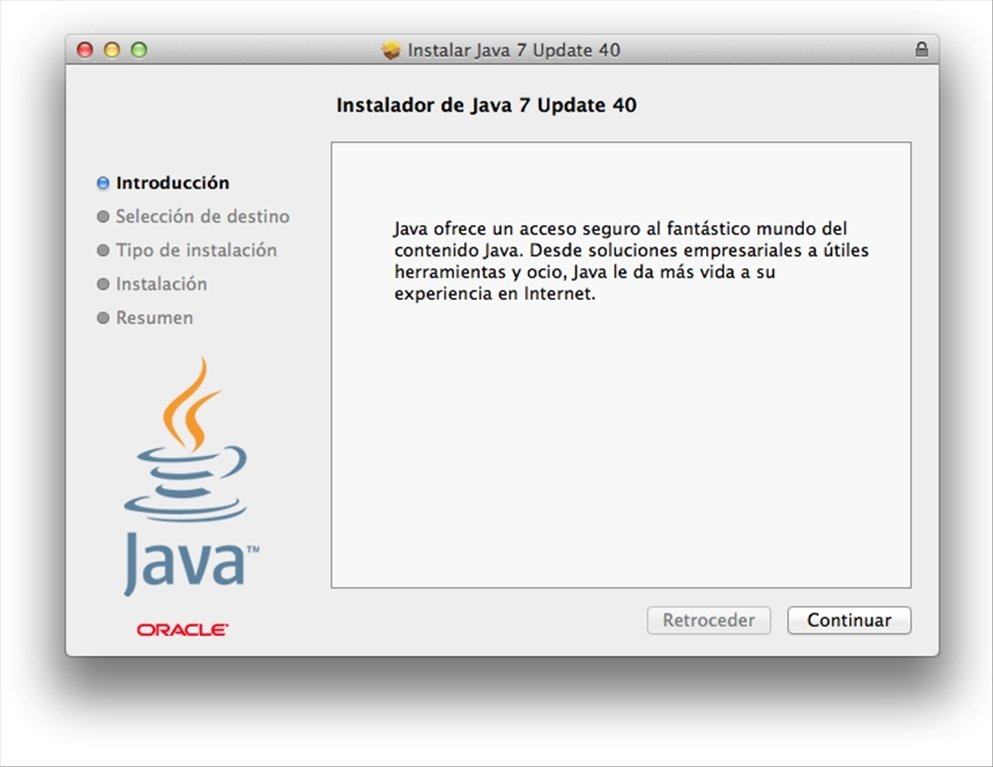
If Java runtime is not installed, you are prompted to install when you first launch any Adobe product. Follow the onscreen instructions in the Java required notification dialog box to install.
Use the following method to initiate the Java runtime installation or confirm if it is installed.
- Go to Applications > Utilities > Java Preferences.
If Java is not installed, you receive the following message: “To open “Java Preferences,' you need a Java runtime. Would you like to install one now?”
- Click Install and accept the license agreement. The Java runtime is downloaded and installed.
Many Adobe applications depend on the Oracle Java Runtime Environment (JRE) for some features to work. Apple recently changed the way it includes Java in Mac OS, and with Lion, Java is no longer preinstalled. It is now an optional install that you must select.
Since current Adobe installers and applications were built before these changes by Apple, Adobe software anticipates that Java is installed. Adobe and Apple have worked together to ensure that you can install Java at OS install time. Or it can be installed later before you install Adobe applications. At runtime, when you launch an Adobe application, you are prompted to install Java if it is not already installed. If you do not install Java before running an Adobe application, there can be missing or improperly behaving features. If you encounter any issues, install Java to correct the problems. Adobe recommends that corporate IT organizations pre install Java (or make sure that Java can be installed through their firewalls/security) to avoid conflicts with Adobe applications.
If the Java runtime is not installed, some issues that are known to occur include -
- Failure to launch.
- Install Java runtime prompts when you attempt to use the applications.
- Applications hang or quit.
Twitter™ and Facebook posts are not covered under the terms of Creative Commons.
Legal Notices Online Privacy Policy
Java 6 Download Mac
This class provides the functionality of a 'Message Authentication Code' (MAC) algorithm.
A MAC provides a way to check the integrity of information transmitted over or stored in an unreliable medium, based on a secret key. Typically, message authentication codes are used between two parties that share a secret key in order to validate information transmitted between these parties.
A MAC mechanism that is based on cryptographic hash functions is referred to as HMAC. HMAC can be used with any cryptographic hash function, e.g., MD5 or SHA-1, in combination with a secret shared key. HMAC is specified in RFC 2104.
- Since:
- 1.4
| Constructor Summary | |
|---|---|
protected | Mac(MacSpi macSpi, Provider provider, String algorithm)Creates a MAC object. |
| Method Summary | |
|---|---|
Object | clone()Returns a clone if the provider implementation is cloneable. |
byte[] | doFinal()Finishes the MAC operation. |
byte[] | doFinal(byte[] input)Processes the given array of bytes and finishes the MAC operation. |
void | doFinal(byte[] output, int outOffset)Finishes the MAC operation. |
String | getAlgorithm()Returns the algorithm name of this Mac object. |
static Mac | getInstance(String algorithm)Returns a Mac object that implements the specified MAC algorithm. |
static Mac | getInstance(String algorithm, Provider provider)Returns a Mac object that implements the specified MAC algorithm. |
static Mac | getInstance(String algorithm, String provider)Returns a Mac object that implements the specified MAC algorithm. |
int | getMacLength()Returns the length of the MAC in bytes. |
Provider | getProvider()Returns the provider of this Mac object. |
void | init(Key key)Initializes this Mac object with the given key. |
void | init(Key key, AlgorithmParameterSpec params)Initializes this Mac object with the given key and algorithm parameters. |
void | reset()Resets this Mac object. |
void | update(byte input)Processes the given byte. |
void | update(byte[] input)Processes the given array of bytes. |
void | update(byte[] input, int offset, int len)Processes the first len bytes in input, starting at offset inclusive. |
void | update(ByteBuffer input)Processes input.remaining() bytes in the ByteBuffer input, starting at input.position(). |
| Methods inherited from class java.lang.Object |
|---|
equals, finalize, getClass, hashCode, notify, notifyAll, toString, wait, wait, wait |
| Constructor Detail |
|---|
Mac
- Creates a MAC object.
- Parameters:
macSpi- the delegateprovider- the provideralgorithm- the algorithm
| Method Detail |
|---|
getAlgorithm
Returns the algorithm name of thisMac object. This is the same name that was specified in one of the getInstance calls that created this Mac object.
- Returns:
- the algorithm name of this
Macobject.
getInstance
Returns aMac object that implements the specified MAC algorithm. This method traverses the list of registered security Providers, starting with the most preferred Provider. A new Mac object encapsulating the MacSpi implementation from the first Provider that supports the specified algorithm is returned.
Note that the list of registered providers may be retrieved via the Security.getProviders() method.
- Parameters:
algorithm- the standard name of the requested MAC algorithm. See Appendix A in the Java Cryptography Architecture Reference Guide for information about standard algorithm names.- Returns:
- the new
Macobject. - Throws:
NoSuchAlgorithmException- if no Provider supports a MacSpi implementation for the specified algorithm.- See Also:
Provider
getInstance
Returns aMac object that implements the specified MAC algorithm. A new Mac object encapsulating the MacSpi implementation from the specified provider is returned. The specified provider must be registered in the security provider list.
Note that the list of registered providers may be retrieved via the Security.getProviders() method.
- Parameters:
algorithm- the standard name of the requested MAC algorithm. See Appendix A in the Java Cryptography Architecture Reference Guide for information about standard algorithm names.provider- the name of the provider.- Returns:
- the new
Macobject. - Throws:
NoSuchAlgorithmException- if a MacSpi implementation for the specified algorithm is not available from the specified provider.NoSuchProviderException- if the specified provider is not registered in the security provider list.IllegalArgumentException- if theprovideris null or empty.- See Also:
Provider
getInstance
Returns aMac object that implements the specified MAC algorithm. A new Mac object encapsulating the MacSpi implementation from the specified Provider object is returned. Note that the specified Provider object does not have to be registered in the provider list.
- Parameters:
algorithm- the standard name of the requested MAC algorithm. See Appendix A in the Java Cryptography Architecture Reference Guide for information about standard algorithm names.provider- the provider.- Returns:
- the new
Macobject. - Throws:
NoSuchAlgorithmException- if a MacSpi implementation for the specified algorithm is not available from the specified Provider object.IllegalArgumentException- if theprovideris null.- See Also:
Provider
getProvider
- Returns the provider of this
Macobject. - Returns:
- the provider of this
Macobject.
getMacLength
- Returns the length of the MAC in bytes.
- Returns:
- the MAC length in bytes.
init
- Initializes this
Macobject with the given key. - Parameters:
key- the key.- Throws:
InvalidKeyException- if the given key is inappropriate for initializing this MAC.
init
- Initializes this
Macobject with the given key and algorithm parameters. - Parameters:
key- the key.params- the algorithm parameters.- Throws:
InvalidKeyException- if the given key is inappropriate for initializing this MAC.InvalidAlgorithmParameterException- if the given algorithm parameters are inappropriate for this MAC.
update
- Processes the given byte.
- Parameters:
input- the input byte to be processed.- Throws:
IllegalStateException- if thisMachas not been initialized.
update
- Processes the given array of bytes.
- Parameters:
input- the array of bytes to be processed.- Throws:
IllegalStateException- if thisMachas not been initialized.
update
Java Se 7 Download Free
- Processes the first
lenbytes ininput, starting atoffsetinclusive. - Parameters:
input- the input buffer.offset- the offset ininputwhere the input starts.len- the number of bytes to process.- Throws:
IllegalStateException- if thisMachas not been initialized.
update
- Processes
input.remaining()bytes in the ByteBufferinput, starting atinput.position(). Upon return, the buffer's position will be equal to its limit; its limit will not have changed. - Parameters:
input- the ByteBuffer- Throws:
IllegalStateException- if thisMachas not been initialized.- Since:
- 1.5
doFinal
Finishes the MAC operation.A call to this method resets this Mac object to the state it was in when previously initialized via a call to init(Key) or init(Key, AlgorithmParameterSpec). That is, the object is reset and available to generate another MAC from the same key, if desired, via new calls to update and doFinal. (In order to reuse this Mac object with a different key, it must be reinitialized via a call to init(Key) or init(Key, AlgorithmParameterSpec).
- Returns:
- the MAC result.
- Throws:
IllegalStateException- if thisMachas not been initialized.
doFinal
Finishes the MAC operation.A call to this method resets this Mac object to the state it was in when previously initialized via a call to init(Key) or init(Key, AlgorithmParameterSpec). That is, the object is reset and available to generate another MAC from the same key, if desired, via new calls to update and doFinal. (In order to reuse this Mac object with a different key, it must be reinitialized via a call to init(Key) or init(Key, AlgorithmParameterSpec).
The MAC result is stored in output, starting at outOffset inclusive.
- Parameters:
output- the buffer where the MAC result is storedoutOffset- the offset inoutputwhere the MAC is stored- Throws:
ShortBufferException- if the given output buffer is too small to hold the resultIllegalStateException- if thisMachas not been initialized.
doFinal
Processes the given array of bytes and finishes the MAC operation.A call to this method resets this Mac object to the state it was in when previously initialized via a call to init(Key) or init(Key, AlgorithmParameterSpec). That is, the object is reset and available to generate another MAC from the same key, if desired, via new calls to update and doFinal. (In order to reuse this Mac object with a different key, it must be reinitialized via a call to init(Key) or init(Key, AlgorithmParameterSpec).
- Parameters:
input- data in bytes- Returns:
- the MAC result.
- Throws:
IllegalStateException- if thisMachas not been initialized.
reset
Resets thisMac object. A call to this method resets this Mac object to the state it was in when previously initialized via a call to init(Key) or init(Key, AlgorithmParameterSpec). That is, the object is reset and available to generate another MAC from the same key, if desired, via new calls to update and doFinal. (In order to reuse this Mac object with a different key, it must be reinitialized via a call to init(Key) or init(Key, AlgorithmParameterSpec).
clone
Java 6.0 Download 64 Bit
- Returns a clone if the provider implementation is cloneable.
- Overrides:
clonein classObject
- Returns:
- a clone if the provider implementation is cloneable.
- Throws:
CloneNotSupportedException- if this is called on a delegate that does not supportCloneable.- See Also:
Cloneable
| Overview | Package | Class | Use | Tree | Deprecated | Index | Help |
Standard Ed. 6
For further API reference and developer documentation, see Java SE Developer Documentation. That documentation contains more detailed, developer-targeted descriptions, with conceptual overviews, definitions of terms, workarounds, and working code examples.
Java 6 Se Download Mac Version
Dmg benefits and side effects. Copyright © 1993, 2015, Oracle and/or its affiliates. All rights reserved. Use is subject to license terms. Also see the documentation redistribution policy.
Scripting on this page tracks web page traffic, but does not change the content in any way.
DnD 5e Magic Items: A few common and rare, many uncommon. Insignia of Claws - HotDQ 94. Armor of Gleaming - XGtE 136. Bracers of Archery - DMG 156. Bracers of Defense - DMG 156. Brooch of Shielding - DMG 157. Circlet of Blasting - DMG 158. Bracers of defense (rare dmg 156) download. Dungeons and Dragons (D&D) Fifth Edition (5e) Magic Item - Bracers of Defense - While wearing these bracers, you gain a +2 bonus to AC if you are wearin.